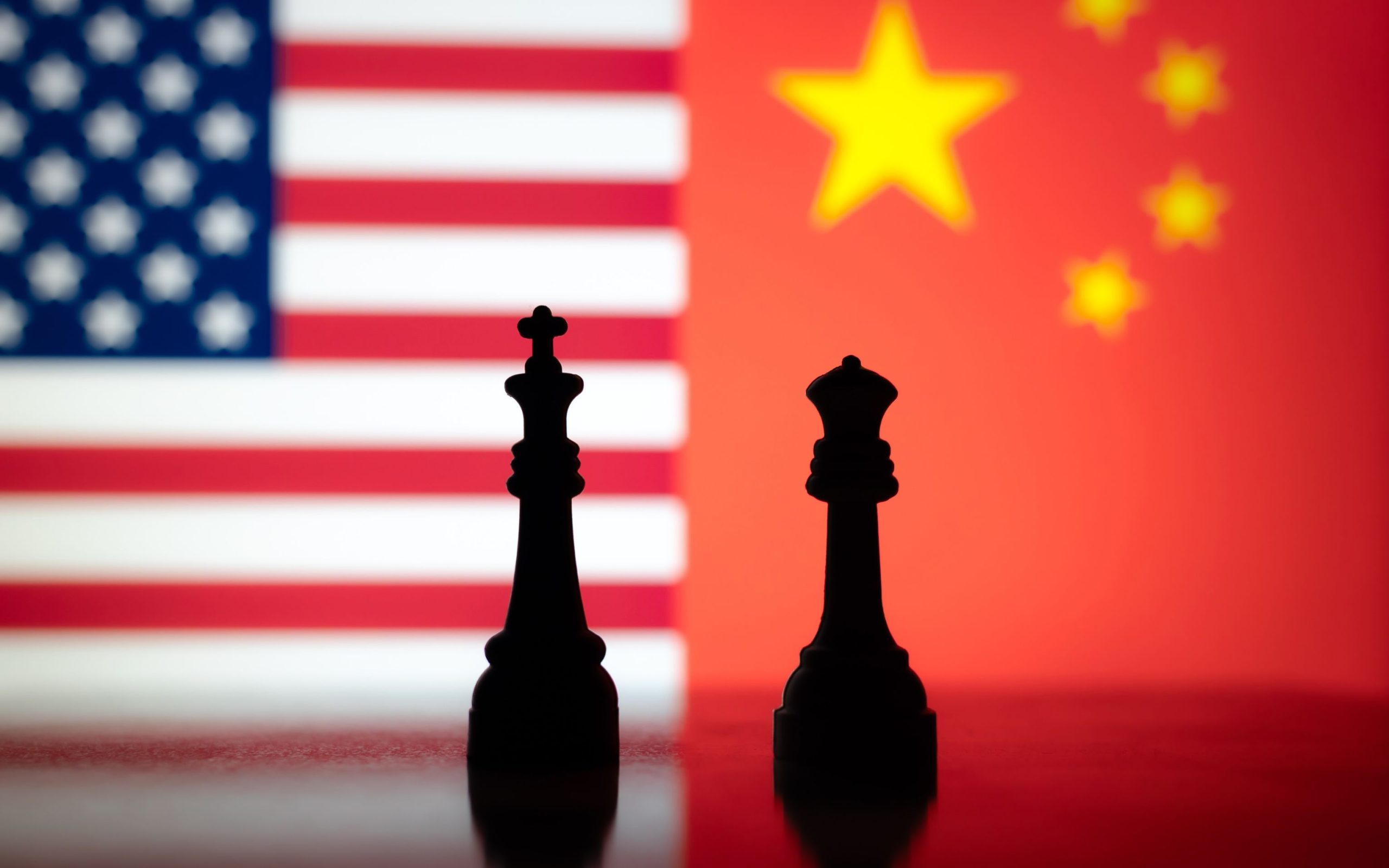
More than 50 percent of Americans think China has overtaken or will overtake the US in terms of technology, the economy, military, and more

Article by:
PUBLISHED:
A new US-China study published in the peer-reviewed Chinese journal Future Communication on 13 November 2026 has found that over 50 percent of Americans surveyed believe the US is falling behind or will be surpassed by China in key areas such as technology, economic power and military strength.
By category, 68.8 percent of American respondents believed China had exceeded or would exceed the US in technological prowess. The figures for economic strength and military power were presented as 65.2 percent and 58.3 percent respectively.
“The 68.8 percent figure is a measure of perception, not of actual technological capability. It tells us that, for ordinary Americans, US technological leadership is no longer taken for granted,” one of the study’s two researchers, Professor Xu Di of Huazhong University of Science and Technology (HUST), said in comments made to the South China Morning Post.
The study measured other areas as well, including cultural strength and political system, where 56.7 percent and 52.7 percent of Americans said China was already ahead or would come out ahead of the US.
The researchers noted that over half of respondents held the view that China was beating the US across the five metrics, with their anxiety primarily focused on material domains such as technology and economy, which had the most impact in shifting a country’s power.
Xu carried out his study in collaboration with HUST researcher He Ruoxi using data from the 2025 Global Public Opinion Index – a HUST-commissioned survey that was run by American firm Qualtrics to measure China’s strength and standing against other countries.
[See more: Beyond the hashtag: Decoding Chinamaxxing’s enduring impact on China’s global influence]
Qualtrics extracted data online between May and August 2025, obtaining 23,257 valid responses from adults located in 36 major countries and regions, including 1,012 from America.
Index data cited by the Post indicates that the 22,257 respondents from the 35 nations outside of China expressed even more confidence in China’s ability to surpass the US.
Some 79.3 percent of them stated China had or would eventually beat the US technologically. 78.6 percent of these participants were of the corresponding view for the economy.
Other US-China studies have also shown China gaining ground against the US. The Lowy Institute’s 2026 Asia Power Index published on 22 November 2026 found that even though the US remained the predominant power in Asia, its lead over China had narrowed substantially, with only a 5.3-point gap between the two countries – the smallest figure since the index’s inception in 2018.
The institute explained that the US’s participation in the Iran War was a major reason for the shift in regional power, as the country was allocating more attention and resources to the Middle East rather than the Asia-Pacific.
A Pew Research Center study published on 15 July 2026 also found that most of the 36 countries surveyed viewed China more positively than the US. They also tended to have a more positive view of Chinese President Xi Jinping compared to US President Donald Trump.
China has seen its influence grow significantly in recent decades, with one of the most prominent areas being the economy. The country’s economy expanded rapidly following its opening up in the late 1970s, becoming the world’s second-largest economy in 2010.
China’s soft power has also surged rapidly, fuelled by cultural phenomena such as Chinamaxxing, the Labubu dolls, the Black Myth: Wukong video game and brands like Huawei and BYD.
The country also had an opportunity to flex its diplomatic powers at the 2026 APEC Economic Leaders’ Meeting in Shenzhen between 18 and 19 November 2026, which saw the hosting of an unprecedented trilateral meeting between Xi, Trump and Russian President Vladimir Putin.