Cool down by indulging in unique flavours that make use of ingredients such as dried tangerine peel, traditional Chinese herbs and Sichuan pepper
Here are new, creative ice-cream flavours to try in the Greater Bay Area this summer
Article by:
PUBLISHED:
Across China’s Greater Bay Area (GBA), cities have been sweltering under the sun and issuing hot weather alerts as temperatures rise to the mid- and high thirties.
In such conditions, the official advice is to avoid outdoor exertions and to drink plenty of liquids. The heat is also a great excuse to cool down with that universal favourite: ice-cream.
[See more: Guangzhou food guide: 5 must-eat Cantonese dishes]
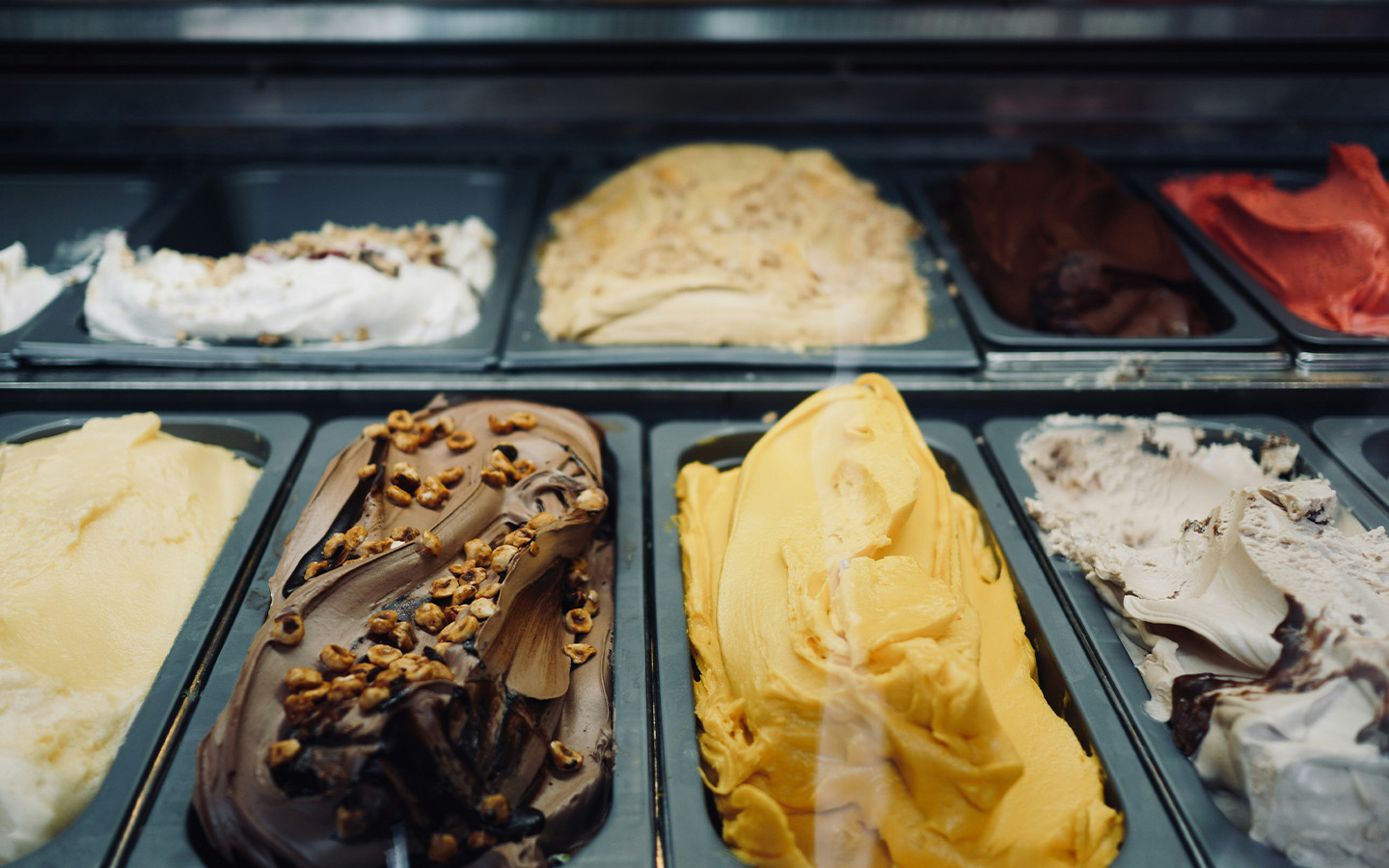
As everyone knows, the icy treat is extremely versatile in terms of flavour. In recent years, flavours like matcha, durian, taro and black sesame have soared in popularity.
Not to be outdone, confectioners across the GBA have released creative and new ice-cream flavours that reflect the region’s unique culture and Chinese heritage. Make sure to try them this summer.
Chenpi (陳皮)
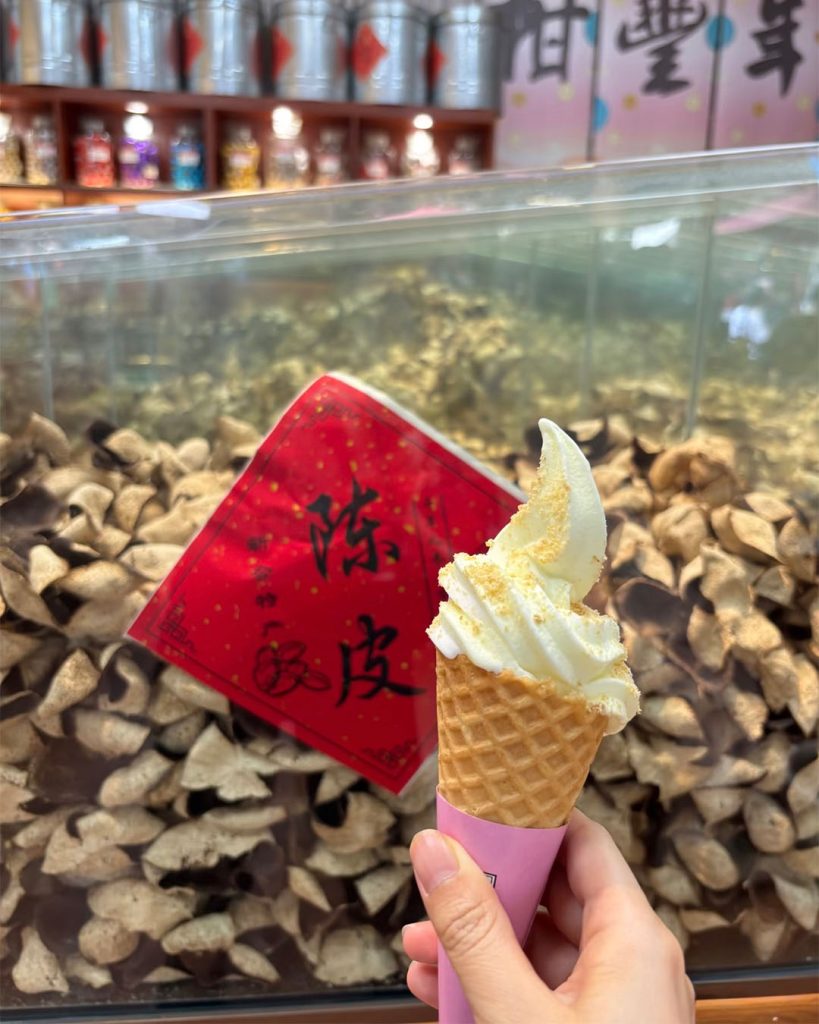
Chenpi is the Chinese name for sun-dried tangerine peel, a highly prized ingredient in Chinese cooking and medicine that is especially popular in the GBA city of Jiangmen.
Normally, it takes at least 3 years to produce the aromatic and flavoursome ingredient, with five decade old chenpi fetching as much as HK$75,000 for 500 grams.
The ingredient is highly versatile and can be combined with just about any dish, snack or dessert imaginable, from red bean soup to duck soup, peanuts and pork ribs.
It is also possible to find stores selling ice-cream featuring chenpi, particularly in Jiangmen. Generally speaking, these ice-creams use a vanilla or matcha flavoured base, showered with shredded chenpi to add a whole new dimension to the ice cream, giving it a zesty and slightly bitter aftertaste.
One of the most popular stores in Jiangmen to buy such ice-cream is Kuiji Chenpi (葵記陳皮), a Guangdong-based franchise established in 1912 that specialises in the sale of provincial specialities, including chenpi from Xinhui. Prices for the dessert can vary depending on the location, although you can expect to pay around 20 yuan.
[See more: Guangzhou scientists achieve historic hybrid with litchi-longan cross]
Traditional Chinese Medicine (中藥)
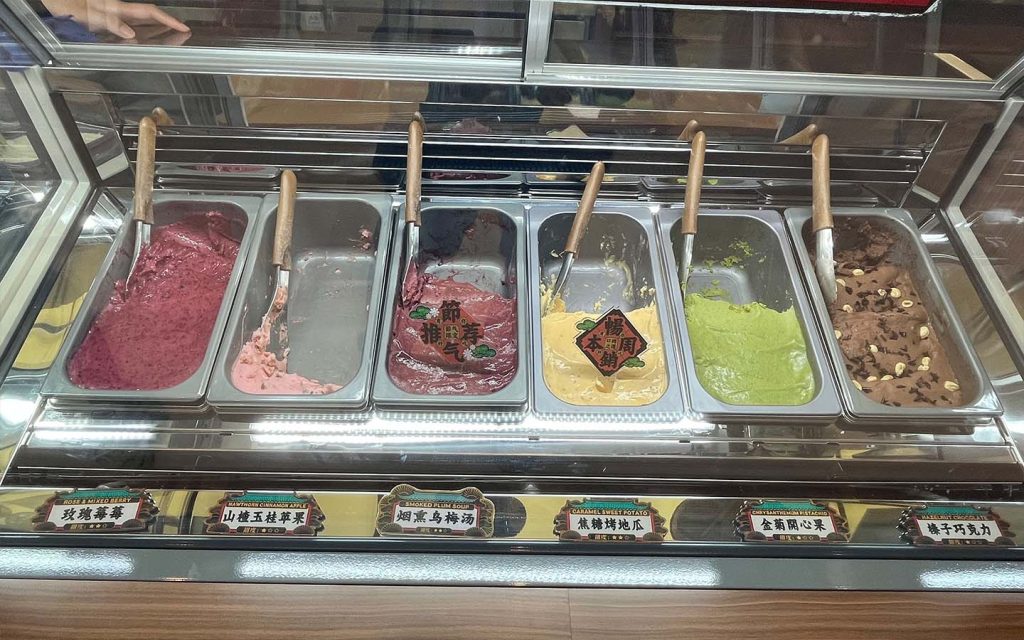
Zhong Yao Tang (忠曜堂) is a gelato brand that specialises in ice-cream inspired by Traditional Chinese Medicine (TCM) ingredients. In fact, the franchise is very proud of its TCM heritage, as its current branches in Zhuhai, Shenzhen, Shanghai or Hangzhou all have decor that resemble a TCM store, complete with wooden medicine cabinets, traditional Chinese signboards and plaques printed with the names of the ingredients.
Among the many flavours available are smoked plum soup (煙燻烏梅湯) and bamboo jasmine (竹香茉莉).
The former is a drink made with ingredients such as smoked plum, Chinese hawthorn and goji berries that is normally consumed in the summer to relieve heat. Even when consumed as ice cream, it retains its distinctive sweet and sour flavour, with little pieces of goji berries thrown in for good measure. Meanwhile, the bamboo jasmine ice-cream draws inspiration from the popular Chinese tea, retaining its refreshing floral taste.
In addition to these flavours, there are a host of other ones on offer such as ginseng jasmine lime tea, caramel sweet potato, rose and mixed berries, as well as white tea and singhara nut.
At Zhong Yao Tang’s Zhuhai store, two scoops are priced at 38 yuan, while three scoops cost 45 yuan. A family pack will set you back at 150 yuan. While these prices are a tad pricier than those at regular ice-cream shops in China, Zhong Yao Tang makes up for it by encouraging you to taste all the flavours for free prior to purchase, making the whole experience a pleasant and flavoursome one.
[See more: Duck blood, bone marrow & turtle jelly: A travel influencer eats like a local in Macao]
Watercress honey (澳門西洋菜密)
Watercress honey is a sweet-tasting Chinese beverage commonly found on cha chaan teng (Cantonese diner) menus in Macao and Hong Kong. The drink can trace its origins to the Portuguese settlers in Macao, and in fact the Chinese name for watercress includes the characters for “Western” (西洋).
Legend has it that watercress was first introduced to Macao by a Portuguese sailor who discovered the vegetable on a deserted island after being quarantined there. He managed to survive the ordeal by consuming watercress, which he later brought to Macao. Eventually, the Chinese adapted it into the beloved watercress honey drink that is still manufactured by various Macao brands such as Kam Loi Syrup Factory and Golden Eagle.
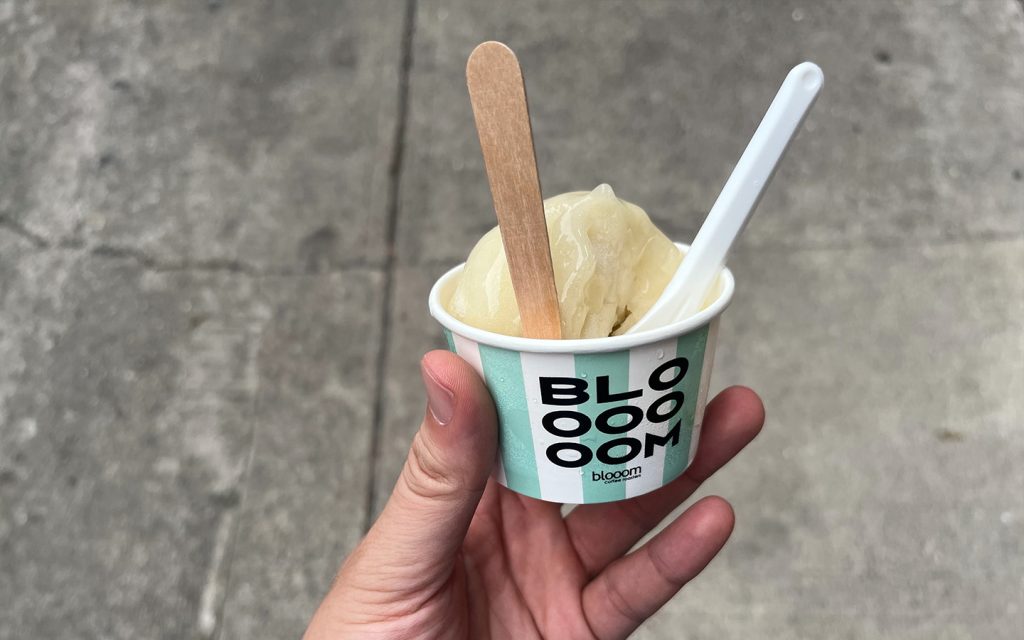
Macao coffee franchise Blooom (yes, there is an extra ‘o’ in the name) has reinvented the drink by transforming it into a milk-free ice cream. Like the beverage it is based on, Blooom’s watercress honey ice cream is refreshing and the perfect antidote to a hot day, retaining the sweet honey-like flavour of its progenitor.
One large scoop costs 35 patacas, while two scoops cost 45 patacas. Customers are able to choose to eat from a cup or a cone. If watercress honey isn’t to your liking, Blooom has plenty of other unique and original flavours. Some highlights include “throat protection,” almond cake, silky tofu pudding, egg tart and black truffle vanilla.
The available flavours can vary by stores and availability at the time. For more information about the store locations, click here.
[See more: Best claypot rice eateries in Macao]
Mung bean (綠豆)
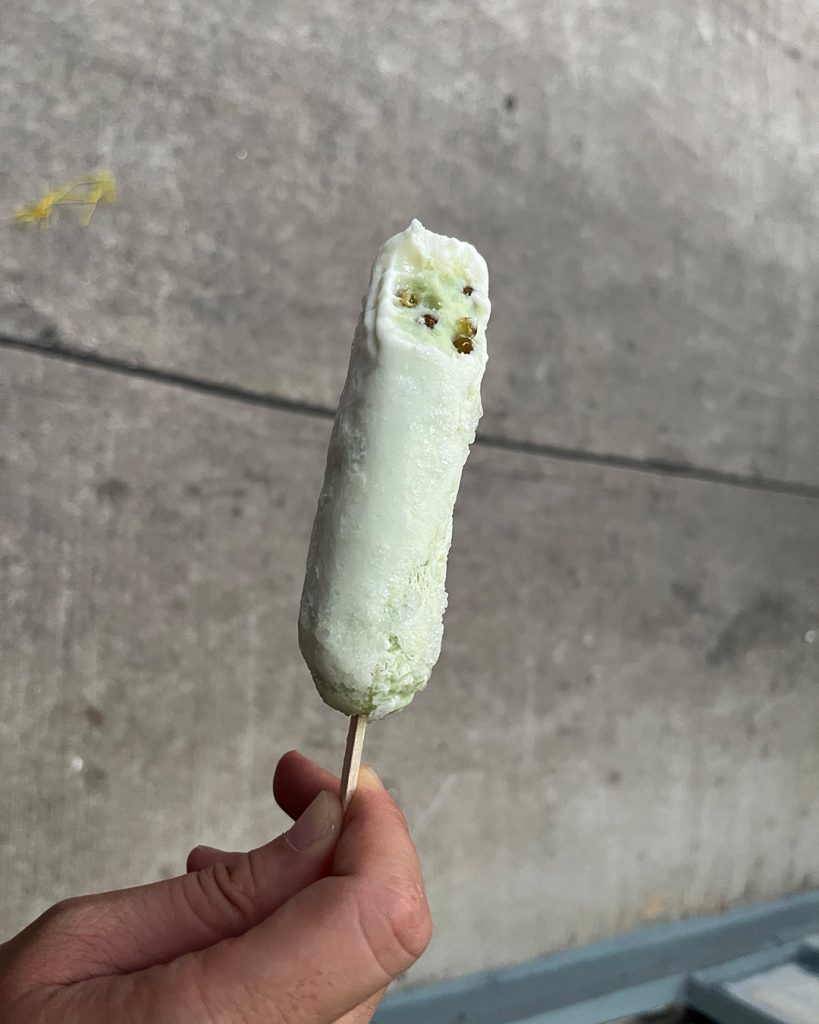
Mung beans are less popular than red beans when it comes to dessert making, with the latter being the preferred ingredient for soups, cakes, shaved ice, mochi and ice cream. Despite this, Mung bean-flavoured ice cream makes for an excellent summer treat, offering a fresh and less sweet alternative.
One brand of mung bean ice cream worth considering is Five Ram – a beloved Guangzhou brand established in the 1960s whose name is a reference to the famous Five Rams statue in Guangzhou’s Yuexiu Park. Five Ram is one of the top ice cream brands in Guangdong, offering coned ice-creams, ice-cream bars and ice-cream cups in classic flavours such as chocolate, taro and vanilla, as well as more exotic ones like hairy fig and sea-salt cheese.
Five Ram’s mung bean ice creams are produced in bar form, and are available for purchase at selected supermarkets in a low-sugar or milky form. The latter is creamy and not overly sweet, with the mung bean filling inside giving it a crunchy texture.
[See more: Macao street food guide: Outcasts 853’s Paji shares her top picks]
Serradura (木糠布甸)
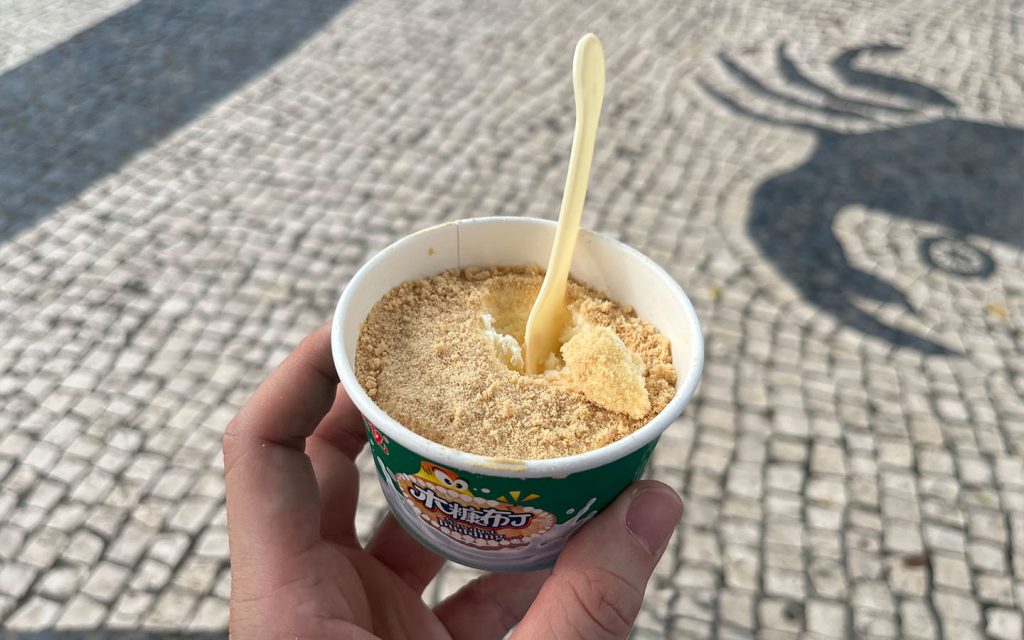
Serradura is a dessert that can be found in Portugal, where it originated, and other lusophone locations such as Macao and Goa. The treat is deliciously simple, consisting of finely grounded biscuits layered with cream. The dust-like look of the crushed biscuits is what gives dessert its name serradura, which literally translates from Portuguese into “sawdust.”
For an alternative take on serradura, visit Gelatina Mok Yi Kei (莫義記), a well-known multi-generational food vendor in Taipa Village that has been in operation since 1935. The product is every bit as delicious as the original dessert, with crushed biscuits covering the vanilla-ice cream.
A cup will cost you 35 patacas. The store also has more traditional ice cream flavours like durian, chocolate and mango, along with other types of desserts and beverages such as agar jelly cakes and sugarcane juice.
[See more: Where Asia’s 50 best chef Ricardo Chaneton eats on his day off]
Sichuan peppercorn (花椒)
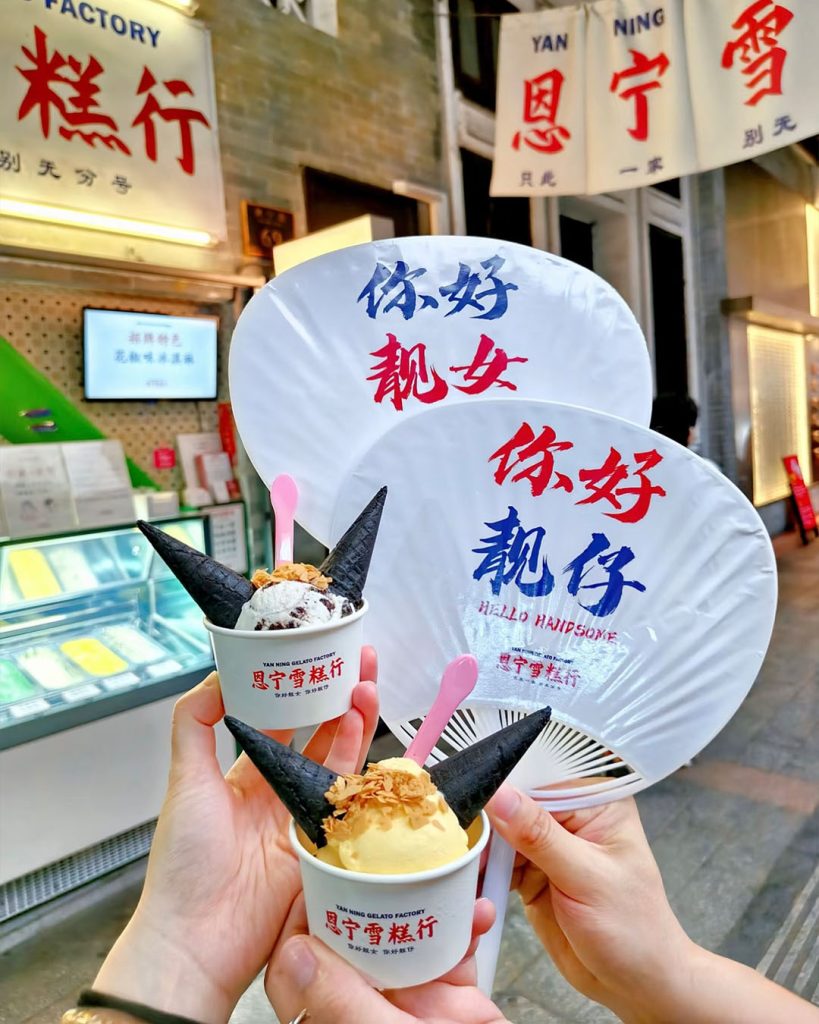
Yanning Gelato (恩寧雪糕行) is a small, but popular ice-cream store located in Guangzhou that offers a variety of non-traditional flavours, one of which happens to be Sichuan peppercorn – a spice normally used alongside chili peppers in dishes such as Chongqing hot pot and mapo tofu to produce the ”mala” or “numbing spice” sensation famous in Sichuanese cuisine.
Thankfully, Yanning Gelato’s Sichuan pepper ice-cream doesn’t attempt to reproduce the same overpowering spicy or numbing sensation in your mouth. Instead, it strikes a fine balance, retaining the largely sweet flavour of ice-cream with a tinge of spiciness. When sampling the dessert for the first time, it will initially taste like ordinary vanilla ice-cream before the fragrant and slightly numbing taste of sichuan pepper begins to kick in.
A small cup of Yanning Gelato’s ice-cream with one scoop costs 23 yuan, while a large cup with two scoops is priced 32 yuan. A cone with one flavour costs 25 yuan.
Aside from Sichuan pepper, the establishment offers other creative flavours, including Hong Kong milk tea, jasmine green tea, ginger milk and yakult.
[See more: Macao fires back after Hong Kong lawmaker calls its food ‘extremely ordinary’]
Cultural landmarks (文創)
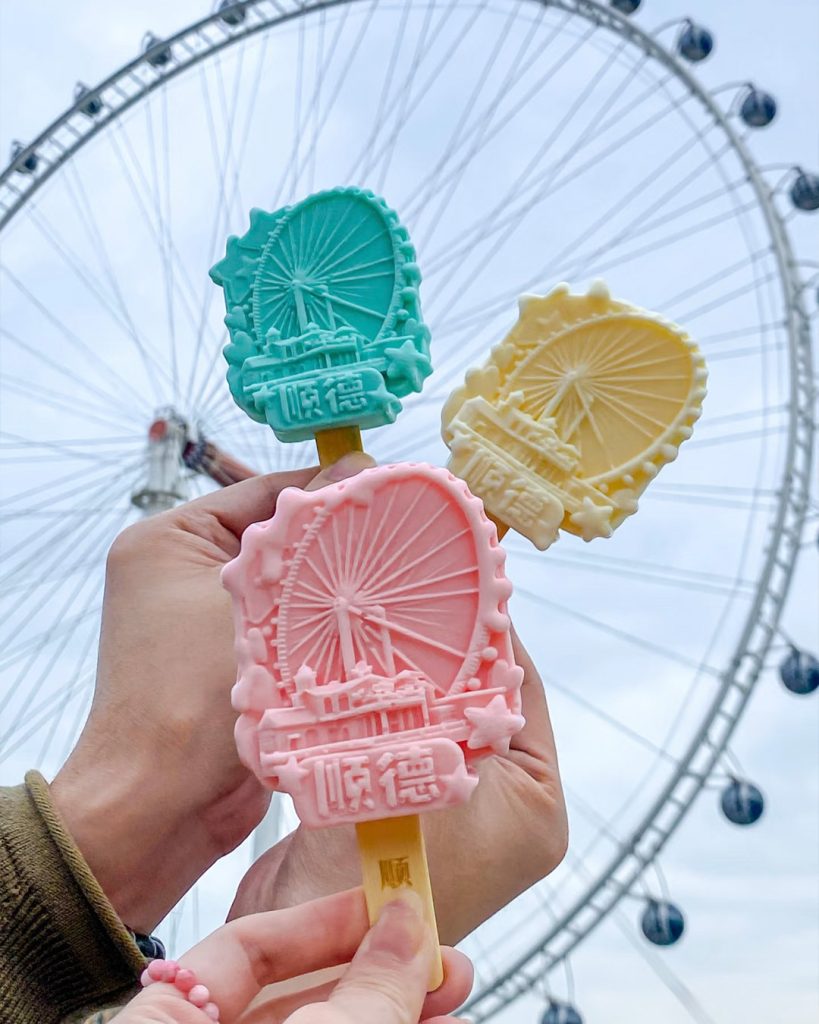
While not technically an ice-cream flavour, “cultural” ice-cream (文創雪糕) – that is ice cream bars shaped like a particular landmark – have become such a major part of the Chinese ice-cream scene that they deserve a mention.
These frozen treats can be found at pretty much all major Chinese tourist attractions, including the Forbidden Palace in Beijing, the Terracotta Army in Xi’an, Longmen Grattoes in Luoyang and the Oriental Pearl Tower in Shanghai.
The success of cultural ice-cream in recent years coincides with the rise of daka or “checking in” tourism in China in which many young Chinese tourists visit a trendy destination for the main purpose of sharing their photos via social media posts. The ice-cream replicas are perfect for such a purpose. As one visitor told the Straits Times, “Seeing the building alone, it’s historic, but a little something like this adds more fun. Also it provides relief from the heat.”
Within the GBA, these tasty snacks can be found in locations such as the Dialou watchtowers in Kaiping, Jiangmen; the Five Goats Statue in Guangzhou; West Lake in Huizhou; and Window of the World in Shenzhen.
Cultural ice-creams come in various flavours such as chocolate, strawberry, as well as more unique ones like cotton candy, sea salt and pistachio. Expect to pay around 20 to 30 yuan for these treats, which achieve their complex level of detail through the use of moulds made from 3D printers.
UPDATED: 30 Jun 2026, 12:24 pm