Against an ageing GBA backdrop, novel clinical research in pain management overlaps Macao’s ambition to bridge molecular biology with Traditional Chinese Medicine.
Ageing and the scientific quest: a medical mission for Macao?
Article by:
PUBLISHED:

By 2050, a third of Macao’s population will have reached the age of 65 while across the Greater Bay Area, nearly 30 million will be considered senior citizens, representing one in every three people, up from a current rate of about one in every ten.
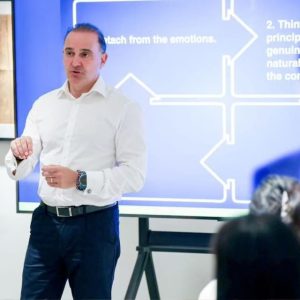
Asia’s greying phenomenon is not an isolated case as the world is generally becoming older, says Cambridge University Professor Ewan St. John Smith who was guest lecturing at the University of Macau’s Institute of Chinese Medical Science on Friday.
“As we age, our focus shifts towards staying both healthy and as pain-free as long as possible,” the co-director of the Cambridge Neuroscience Interdisciplinary Research Centre told The Bay on the sidelines of his presentation “Joint Pain: Pathogenesis and Prevention.”
[See more: Could a Hong Kong discovery reverse glaucoma blindness? Early study restores 70 percent of vision in mice]
Around the globe, the discomfort is already being felt. An estimated 600 million people suffer from osteoarthritis, the degradation of cartilage that cushions bones against friction. However, management remains poor, as current drugs often lack long-term efficacy while others cause unwanted side effects.
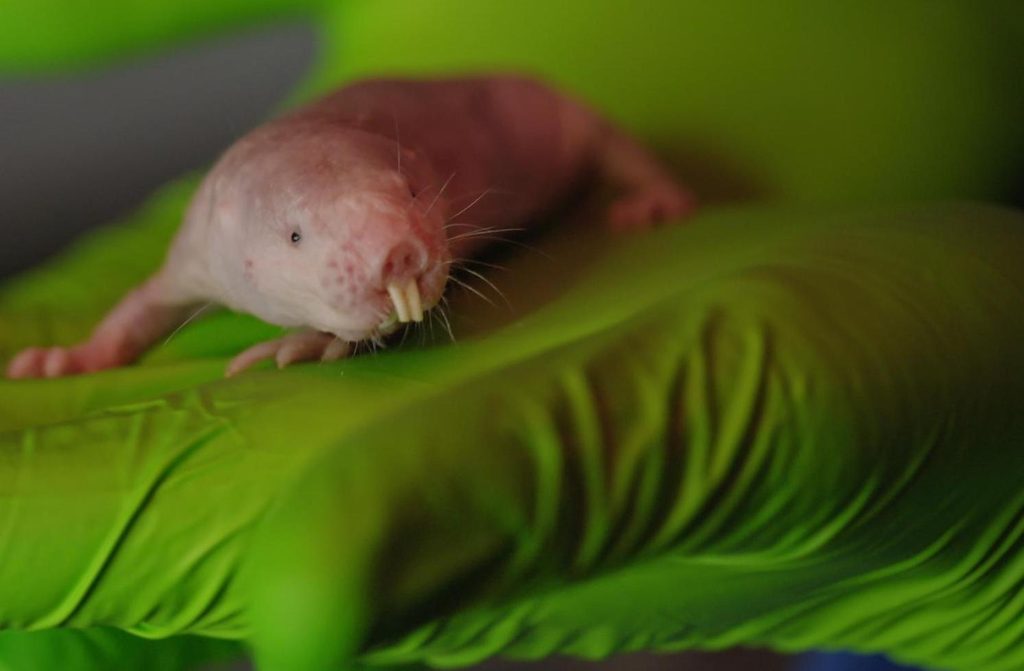
“Pain is not only driving clinical decisions in how we allocate resources, but also recalibrating where we look for solutions,” said Smith, who has dedicated a lab to studying naked mole-rats which are impervious to certain uncomfortable sensations and demonstrate near-total resistance to cancer.
Smith’s work embodies a larger push to study various organisms to help researchers understand how chemical nociception works at a molecular level, with naked mole-rats offering an alternative pathway to yielding valuable insight for human biological benefit, he said.
GBA ageing and medical innovation
Amid the GBA’s ageing backdrop, fresh clinical information bears immediate real-world impact for local technicians bridging molecular biology with Traditional Chinese Medicine (TCM) under Macao’s “1+4” initiative to build new economic pillars and diversify its economy.
Since the start of the decade, the proportion of visitors over the age of 65 has almost doubled, according to MGTO data analysed by The Bay, highlighting how the GBA’s demographic shifts are presenting a market opportunity to develop a wellness offering as part of the city’s economic diversification campaign.
Last year, Macao hosted the inaugural Macao Hengqin Medical Tourism Symposium, which examined the SAR’s comparative strengths and opportunities to develop its own medical tourism sector. The industry is projected to be worth US$36 billion by 2032, according to a paper by Glenn McCartney, associate dean of the Faculty of Business Administration at the University of Macao, who adds that the Asia Pacific region will account for 75 percent of that market.
Smith argues that studying pain goes beyond biology, noting that its implications deepen the GBA’s development of the humanoid and robotic industry as well.
[See more: Sam Hou Fai outlines Macao’s aims for its Third Five-Year Plan]
As robots become more ubiquitous in society, their understanding of what discomfort is, albeit as data, could better integrate androids with humans, as recognising pain would prevent them from damaging themselves or causing harm to the people and environment around them.
The philosophical question was discussed in the award-winning short Pain in the Machine, where Smith and several colleagues proposed the benefits of machines knowing what pain is, but pontificated that even if robots could be programmed to know, should they feel it?
Despite its unpleasantness, pain is viewed as the pinnacle of human consciousness, particularly how emotions are perceived.
The existence of pain is what defines our mortality, a discomfort we are stuck with, for good and bad reasons, he says.