Ties between the two cities have been growing, but there is still room for greater social, economic and transport integration
Twin cities in the making: How can Macao better integrate with Hengqin?
Article by:
PUBLISHED:
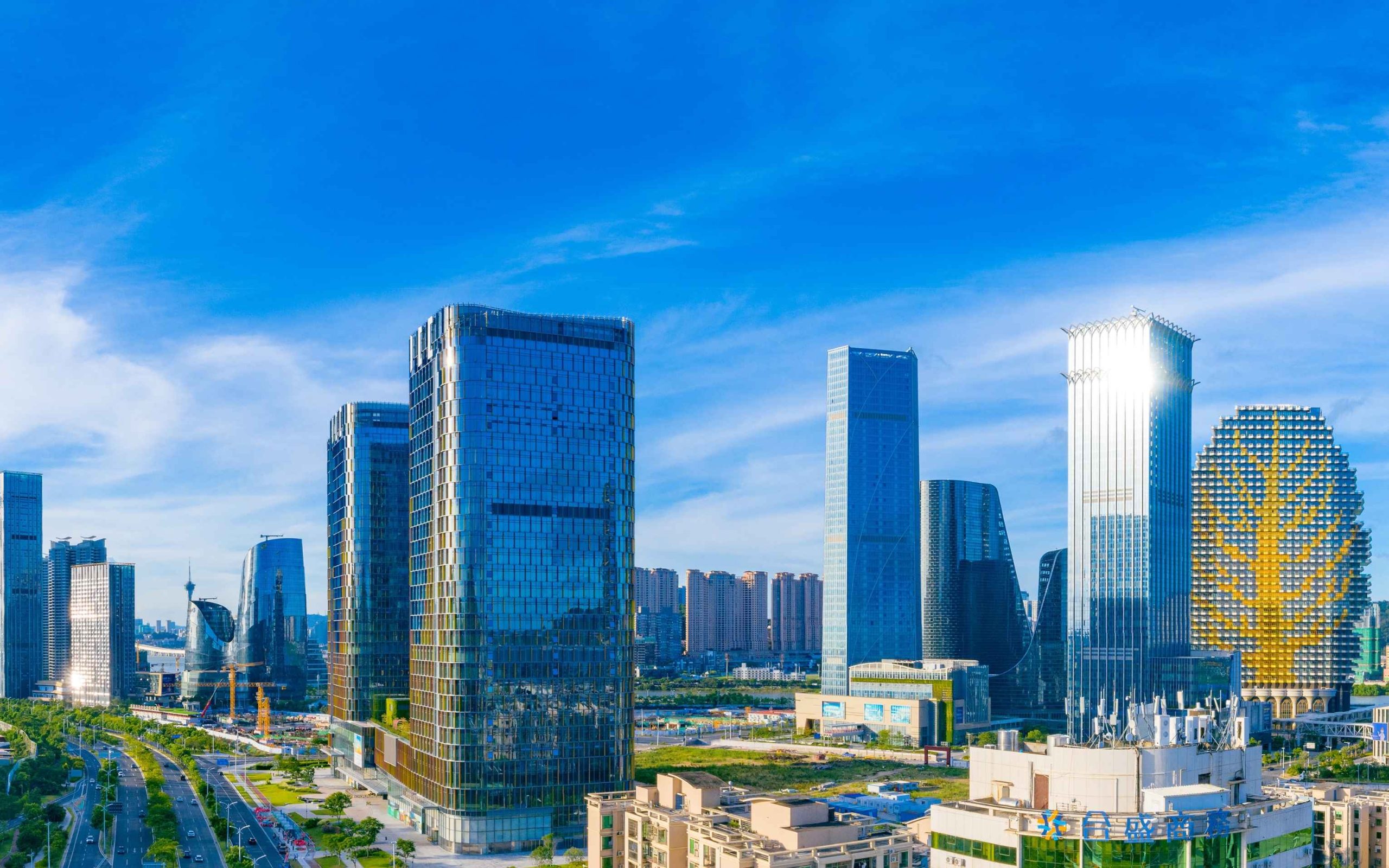
Gambling has long been the lifeblood of Macao’s economy, but it has also rendered the territory susceptible to market fluctuations, regional competition and global crises such as the Covid-19 pandemic.
Aware of the dangers of putting all the city’s eggs in one basket, the Macao government has tried to diversify the local economy into other sectors, focusing on the four key industries of high technology, finance, traditional Chinese medicine (TCM) and life sciences, as well as events (including conventions, exhibitions, cultural events and sporting fixtures).
A key component to this strategy of economic diversification is Hengqin – an island district of the neighbouring city of Zhuhai that the central government has earmarked to support Macao’s shift away from casinos. With an area of 106.46 square kilometres, Hengqin is roughly three times the size of the SAR, offering Macao residents plenty of extra living space and resources for economic growth.
To enable Macao to reap the benefits, the SAR and mainland governments have been working to integrate the two cities in recent years. One watershed moment in this endeavour was the designation of Hengqin as the Guangdong-Macao In-Depth Co-operation Zone in 2021, which transferred the island’s management from Zhuhai to the governments of Guangdong and Macao.
In the five years since the zone’s founding, the authorities have put forward various policy measures, incentives and projects to bring Macao and Hengqin closer together. As Hengqin enters what the Macao government describes as a “crucial phase” in its second phase development in 2026, The Bay looks at how the two cities can better align in areas such as culture, the economy and transport.
How can the social differences between Macao and Hengqin be reconciled?
Macao and Hengqin have made great strides in terms of economic and institutional ties in recent years. However, one area that continues to lag behind is social integration. This is in spite of the growing number of people from Macao choosing to live in Hengqin – they totalled 30,577 as of November 2025 – and the establishment of the SAR-style housing development known as the Macau New Neighbourhood (MNU).
As City University of Macau researcher, Long Zhou, and his colleagues noted in a 2022 study, “the citizens from the two cities have lived and grown up with very different cultures, traditions and values,” with both sides holding contrasting “objectives and perspectives.”
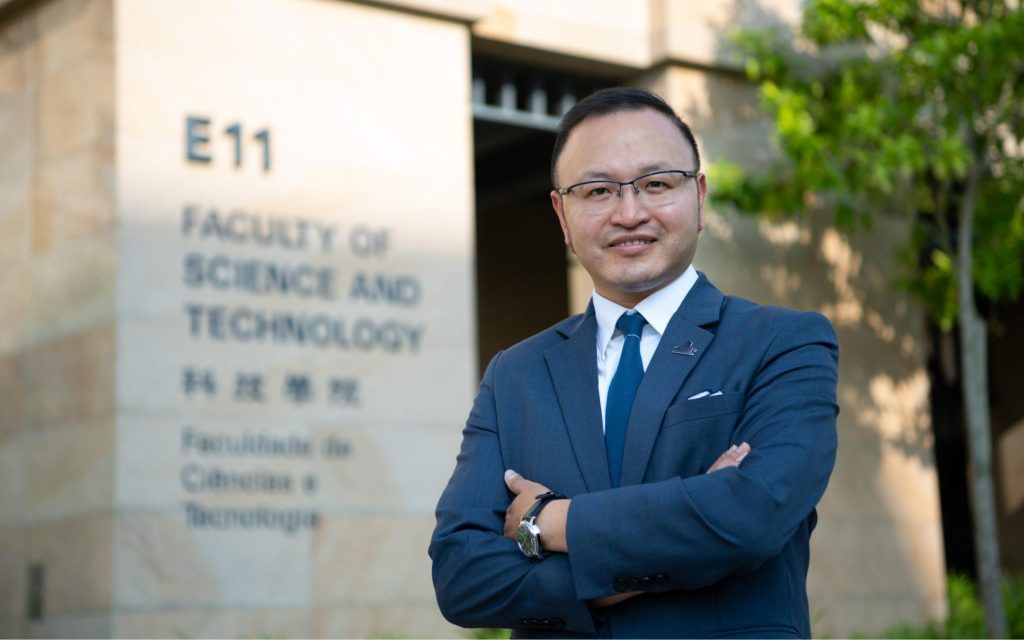
Alfred Wong Seng Fat, the executive vice president of the Macau Youth Greater Bay Area (GBA) Development Association, agrees, arguing that more needs to be done to enable Macao and Hengqin residents to better understand one another and recognise that both cities are part of “a family” sharing the same space.
“I think mindset development is more important than hardware because after Macao residents fully accept Hengqin and Macao together, working there will just be the natural order of things,” he says.
To this end, Wong believes that it is necessary to take steps to facilitate deeper cultural and social interaction between Macao and Hengqin. Rather than organising simple one-off visits to Hengqin, he argues that the Macao government should work with local associations to offer more intensive courses and workshops that allow Macao residents to understand Hengqin on a deeper level.
He notes that such programmes would focus on areas such as life in Hengqin, local policies, industries and future development, which many residents, especially those in the younger generation, do not know about.
[See more: Hengqin at 5: A policy project or a genuine second home?]
The organisation of joint cultural, sports and tourism activities and events is another area that Wong believes will help to bring the two cities closer together.
“We have to offer some activity to connect together and not only be separate, with Macao having its own activity and Hengqin its own activity,” the expert notes, adding that events and shows such as the Macao International Parade and the House of Dancing Waters could potentially be extended into Hengqin.
“Every year, we have international competitions, but we don’t have good enough training areas,” he adds. “I think [Hengqin] can cooperate with Macao and offer some area for their training and become the venue for regular shows and activities.”
At the same time, the association representative points to the need for more direct dialogue between the Hengqin government and Macao residents, so that the authorities can better grasp the needs and expectations of Macao locals regarding Hengqin.
For instance, Sindy Cheong, a middle-aged Macao resident living in the MNU with her family, mentions that the authorities could make life more convenient by extending the MNU health centre’s operating hours by half a day on Saturday.
Cheong, who runs a social media channel sharing her experiences in Hengqin, notes that this would be of great benefit to Macao families, who find themselves unable to take their children for a checkup after school, as the centre has already closed.
To ensure that the government can hear the voices of people such as Cheong, Wong suggests conducting regularly scheduled “tea-break” community opinion-gathering sessions between senior officials and residents, similar to the ones launched in Macao in early 2026.
How can the two cities further build up their economic ties?
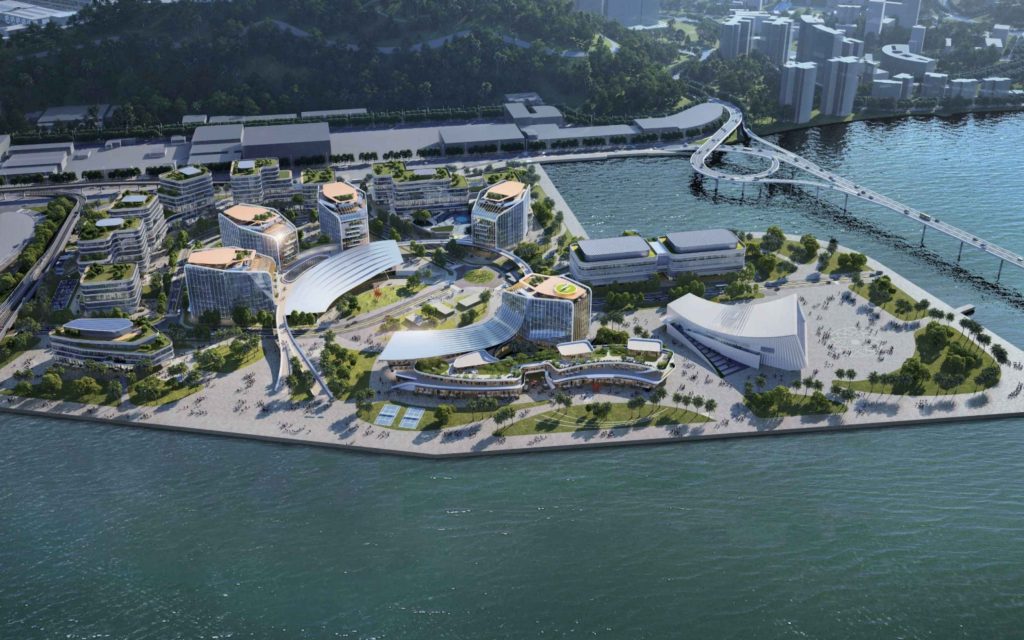
Economically, Macao and Hengqin have seen their ties deepen considerably in recent years, with the number of Macao-funded businesses growing by around 44 percent over a three year period, from 5,323 in 2022 to 7,681 in 2025. Moreover, the two cities have collaborated across multiple conventions and exhibitions, and major business projects such as the Traditional Chinese Medicine Science and Technology Industrial Park of Co-operation between Guangdong and Macao, as well as the Service Centre for Economy and Trade between China and Portuguese/Spanish-speaking countries.
Despite these successes, Wong argues that economic ties can be further boosted across key sectors. One of these includes science and technology, which is entering a new phase of development in the SAR with the construction of a Macao Sci-Tech Park.
According to the expert, Macao could consider having the park focus mainly on R&D, with Hengqin, which is already home to many science parks and plenty of space, complementing the future facility by offering production lines needed to transform Macao’s research into market-ready products.
Other nascent areas ripe for collaboration include the environmental, social and governance (ESG) sectors, which Wong notes are well-suited for Hengqin due to the city’s vast tract of green space, which allow for green and low-carbon projects that would otherwise be difficult for Macao to host due to space limitations.
“I don’t see much of green and ESG industries in Macao, but mainland China has emphasised controlling carbon by 2030 and 2060,” he explains, adding that the building up of such a specialised sector would be of benefit to Hengqin’s development.
[See more: Guangdong FTZ: Should you start your company in Qianhai, Hengqin or Nansha?]
Data centres are another area of cooperation, with Wong noting that “the space [in Macao] is quite small, and the [local] data centres have too many limitations.”
By leveraging Hengqin-built data centres, the expert notes that Macao would be able to overcome its spatial limitations, gaining access to infrastructure that would support local AI development at a cheaper rate than the dedicated data link that already exists between Macao and Hong Kong.
One other emerging sector that the expert underlines is the low-altitude economy. Macao is already making progress in the field, announcing in June 2026 that it was actively considering cross-border low-altitude operations with Hengqin. But as with data centres, Macao’s environmental bottlenecks are constraining the deployment of drones in the city for commercial purposes such as logistics. However, Wong says that Macao residents and firms can still develop the sector by contributing “creative, innovative ideas,” with Hengqin serving as the host.
What can Macao and Hengqin do to improve crossborder travel?
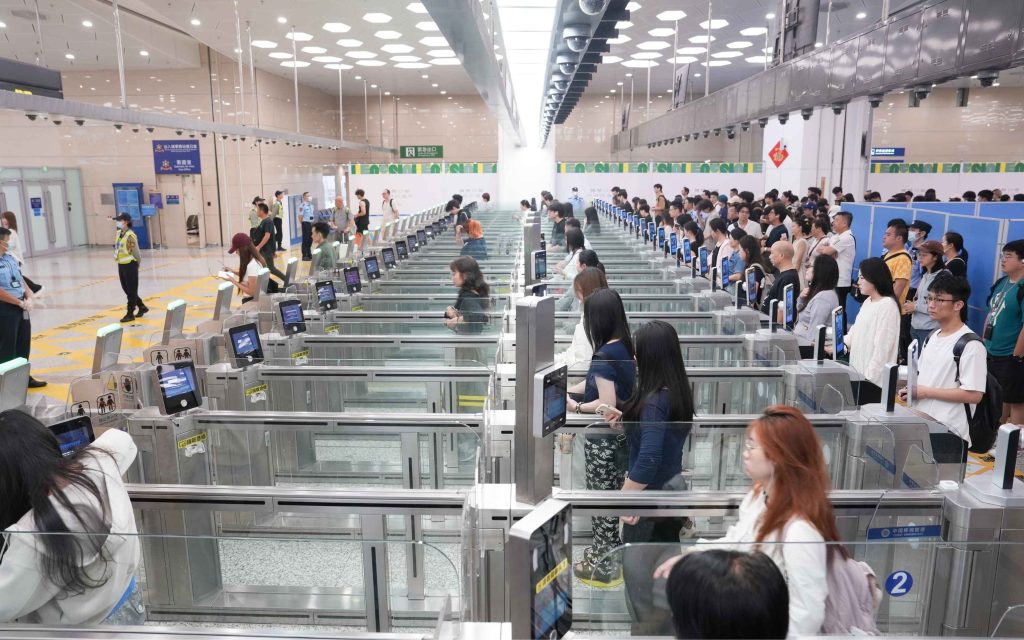
Transport is also pivotal to establishing closer ties between Macao and Hengqin. As Wong notes, “transport connects us together; it lets us live together…[which] is a very important concept for Macao and Hengqin development.”
Although the Macao LRT’s Hengqin Line, which opened in 2024, has made it much easier to travel between the two cities, Wong hopes to see further integration between Macao and Hengqin’s railway systems, arguing that “we need to really connect together in the same place and same station. We [can] use facial recognition and other AI technology that will allow us to just walk [seamlessly] between the two places.”
Plans are already underway to realise this vision, with the Macao secretary for transport and public works, Raymond Tam, unveiling a plan in June 2026 to eventually link the SAR’s LRT system with one that is being developed in Hengqin.
Meanwhile, Cheong believes the authorities need to do more to streamline Macao-Hengqin border crossings. She calls for the Hengqin side of the Hengqin Port to follow the lead of the Macao side by establishing a dedicated crossing channel for Macao residents.
“It’s because when you’re crossing the border, it overlaps with a concert or the Golden Week holidays in the mainland a lot of the time,” she says, noting that the channels become packed with visitors and workers. “When residents return to Macao [from Hengqin] for work, they end up being late 90 percent of the time. They have no choice, but to leave their homes [in Hengqin] about an hour early to overcome this issue.”
[See more: How China’s Greater Bay Area cities fit together: Who does what?]
At the same time, Cheong believes the government needs to better educate the public through guides or videos on ways to cross the border during emergency situations. She cites the example of a pregnant Macao woman in Hengqin who was already in labour, but was unsure of how to quickly cross the border to return to the SAR to give birth.
Moreover, Cheong mentions that residents are similarly clueless on how to quickly obtain a new mainland travel permit for young students who have lost their document – a frequent occurrence among families that results in their children having to miss out school.
Indeed, fixing these seemingly innocuous problems, along with boosting social, economic and transport integration, will be key to Macao and Hengqin becoming bonafide twin cities.
UPDATED: 09 Sep 2026, 12:28 pm